
Rental Deposit in Luxembourg: Legal Limits, Payment Options and State Financial Aid
Renting in Luxembourg? Discover the legal rental deposit limit, payment options, refund deadlines and government assistance for eligible tenants.
05/11/2026


Spain is one of Europe’s most attractive destinations for international professionals, students and people looking for a fresh start. Yet finding a room to rent can be difficult, particularly in large cities where demand is high, rental options are fragmented and information is spread across multiple channels. That is the opportunity behind Roomie-Radar’s expansion into Spain. We started by focusing on the needs of people moving internationally and the landlords looking to reach them. After developing our platform in Luxembourg and Belgium, Spain represents a natural next step: a large market with strong demand for shared accommodation and a growing need for clearer ways to connect tenants and property owners.
Roomie-Radar now has 788 listings in Spain, with the largest concentrations in Madrid and Barcelona. This article looks at where that supply is located, what official housing data tells us about room rentals and why we believe there is room for a more focused platform.
Spain combines a large international population, major university cities, a strong professional-services sector and a significant flow of people relocating for work, study and internships. Many of these people do not need an entire apartment. They need a furnished room, a manageable monthly budget and a practical way to contact a landlord before arriving.
The affordability challenge is also visible in the national statistics. According to Spain’s National Statistics Institute (INE), 44.3% of people aged 26 to 34 were still living with their parents in 2025. Among those who remained at home, 47.3% cited the inability to afford buying or renting a home as the main reason. These figures do not measure demand for shared rooms directly, but they illustrate the wider pressure that housing costs place on younger adults.
For people relocating from abroad, the challenge can be even more immediate. They may need accommodation before starting a new job or university course, often without being able to attend viewings in person. A room in a shared flat can offer a more accessible starting point than renting a whole property.
A report published by Spain’s Ministry of Consumer Affairs examined rental advertisements published between March and September 2026 in 53 provincial capitals: Out of 381,997 rental advertisements, 182,222 concerned rooms, representing 47.7% of the advertisements analysed.
This figure needs an important qualification. It describes the share of advertisements, not the share of homes in the housing stock. When the report looks at dwellings rather than advertisements, rooms in shared accommodation account for 19.1% of the dwellings analysed. The distinction matters because one property can generate several room advertisements. Even with that distinction, the data confirms that room rentals represent a substantial part of the advertised rental market. It is a segment with its own requirements: flexible move-in dates, furnished accommodation, clear information about bills and deposits, and direct communication with landlords.
At Roomie-Radar, we focus on this specific type of accommodation rather than treating rooms as a secondary category within a general property marketplace.
Our current national listing counter shows 788 listings in Spain. Madrid and Barcelona account for the largest share of the visible city-level supply, with 412 and 238 listings respectively. Madrid and Barcelona together represent 650 listings, equivalent to approximately 82.5% of the national counter. This concentration reflects the importance of the two largest urban markets for people relocating to Spain.
The city-level directory figures may not add up exactly to the national counter. The country total and city counters are dynamic, and their displayed figures can be captured at different moments. We therefore use 788 as the national figure and report the city counts as displayed, without allocating the difference to cities where it has not been confirmed.
Madrid is the largest concentration in our current Spanish inventory, with 412 listings. Its international business environment, universities, professional opportunities and transport connections make it a natural destination for people arriving from abroad. Demand can come from international employees, interns, postgraduate students and people moving to the capital for a new role.
Barcelona follows with 238 listings. Its international profile, universities, technology ecosystem and tourism-related employment attract a diverse population of newcomers. For many of them, a room in a shared flat is a practical way to establish themselves while they get to know the city and its neighbourhoods.
The two markets are different, but they share one characteristic: people searching from abroad often need reliable information before they can visit a property. Clear listing details and a direct way to contact the landlord can make the first stage of the search easier.
Roomie-Radar connects people looking for rooms with landlords, property professionals and coliving operators. The platform is designed around shared accommodation, including rooms in shared flats, studios and coliving spaces.
For people searching for a room, the platform brings listings together in one place and provides information to help compare location, rent, charges, availability and minimum stay. Users can create a profile and contact landlords through the platform. Using Roomie-Radar is free.
For landlords and operators, the objective is to reach an audience that is actively looking for this type of accommodation. Roomie-Radar offers zero listing fees and zero commissions, allowing landlords to keep 100% of the rental income. The platform also provides management tools to support the listing process.
We believe this focus matters. A landlord renting out individual rooms has different needs from someone marketing an entire residential property. Likewise, an international candidate looking for a furnished room for six months has different priorities from a family searching for a long-term apartment.
Roomie-Radar’s development in Luxembourg taught us that a focused marketplace can address a clear gap between the way people search for accommodation and the way landlords advertise it. International candidates often arrive with a defined timeframe, a limited period to find somewhere to live and questions that need answering before they can make a decision.
Expanding into Belgium allowed us to test whether the same approach could work in another market with a large international population. Spain is a different scale of opportunity, but the underlying need is familiar: make room listings easier to discover and help both sides start a direct conversation. Our approach is to grow city by city, while working with landlords, property professionals and coliving operators who can bring relevant accommodation to the platform. The current distribution of listings shows that Madrid and Barcelona are the strongest starting points, while the presence of listings in other cities gives us a foundation to develop further coverage.
The evidence points to a substantial and diverse market. Official data shows that room advertisements represented 47.7% of the rental advertisements analysed in the Ministry’s study, although the share of dwellings used for room-sharing was lower, at 19.1%. Meanwhile, the INE figures highlight the affordability pressures facing younger adults. These indicators do not guarantee that every city or segment will grow at the same rate. They do, however, show why shared accommodation deserves to be treated as a market in its own right. The opportunity is not simply to publish more advertisements. It is to make the search clearer, provide useful information and connect people with landlords more efficiently.
For Roomie-Radar, Spain is an important step in that direction. With 788 listings currently counted nationally and a strong concentration in Madrid and Barcelona, we have a base from which to keep developing the platform.
Spain has a large and varied rental market, and shared accommodation plays an important role in the options available to students, young professionals and international newcomers. Official figures show that room advertisements make up a significant share of rental listings, while housing affordability remains a challenge for younger adults. Roomie-Radar is expanding this focused approach into Spain with 788 listings, including 412 in Madrid and 238 in Barcelona. We will continue developing our presence with landlords and accommodation operators, while making it easier for people to find rooms that match their needs.
Looking for a room in Spain? Explore the listings on Roomie-Radar. You can search by location and accommodation type, compare the details and contact landlords directly. Browse rooms in Spain on Roomie-Radar. Using Roomie-Radar is free.
1. How many room listings does Roomie-Radar have in Spain?
Roomie-Radar’s current national counter shows 788 listings in Spain. The largest concentrations are in Madrid, with 412 listings, and Barcelona, with 238. Other cities represented include Sevilla, Valencia, Getafe, Bilbao, Logroño and Málaga. Listing numbers are dynamic and may change as new accommodation is added or existing listings are removed.
2. Which Spanish cities have the most Roomie-Radar listings?
Madrid currently has the highest number, with 412 listings, followed by Barcelona with 238. Sevilla has 19, Valencia 17 and Getafe 10. Madrid and Barcelona together account for approximately 82.5% of the national counter, making them the platform’s two largest Spanish markets at the moment.
3. Is using Roomie-Radar free?
Yes. Using Roomie-Radar is free. People looking for accommodation can create a profile, explore available rooms and submit applications without paying a platform fee. Landlords can also publish listings without listing fees or commissions, keeping 100% of their rental income.
4. What types of accommodation can I find on Roomie-Radar in Spain?
The platform focuses on rooms in shared flats, as well as studios and coliving accommodation. Each listing can provide details such as location, rent, charges, availability and minimum stay. The information available depends on what is supplied for each property, so candidates should review the listing and contact the landlord if they need clarification.
5. Why are room rentals important in Spain?
Room rentals provide an alternative to renting an entire apartment, particularly for students, interns, young professionals and people relocating from abroad. Spain’s Ministry of Consumer Affairs found that room advertisements represented 47.7% of rental advertisements analysed between March and September 2026 in 53 provincial capitals. The report also distinguishes advertisements from dwellings: rooms in shared accommodation represented 19.1% of the dwellings analysed.
6. Why are Madrid and Barcelona the main markets for Roomie-Radar?
Both cities attract international workers, students and people moving for professional opportunities. Madrid has a large business and university ecosystem, while Barcelona has an international profile and a strong technology, education and services sector. Their size and international appeal make them important destinations for people searching for furnished rooms before or shortly after relocating.
7. Can international students and professionals use Roomie-Radar?
Yes. Roomie-Radar is designed for people looking for shared accommodation, including international students, interns, young professionals and expats. Candidates can create a profile, review room details and contact landlords through the platform. It is useful to include information about the reason for the stay, intended move-in date and expected length of rental when applying.
8. What does the INE say about housing affordability for younger adults in Spain?
The INE’s 2025 Living Conditions Survey found that 44.3% of people aged 26 to 34 were still living with their parents. Among those living with their parents, 47.3% said the main reason was that they could not afford to buy or rent a home. These figures provide context for the housing affordability challenge, although they do not measure demand for shared rooms directly.
9. Do the city listing figures add up to the national total of 788?
Not exactly. The national counter and the city-level directory are dynamic and may be captured at different moments. The visible city figures listed in this article add up to a slightly different total. To avoid assigning listings to cities without confirmation, Roomie-Radar reports the national counter separately from the displayed city figures.
10. How can I search for a room in Spain on Roomie-Radar?
Visit the Spain listings page at roomie-radar.com. You can explore the available accommodation, review the information provided in each listing and submit an application to the landlord. Using Roomie-Radar is free.
Renting in Luxembourg? Discover the legal rental deposit limit, payment options, refund deadlines and government assistance for eligible tenants.
Looking for a student room in Brussels? The student lease, the two-month notice period and the maximum deposit, under Brussels rules.

Renting a room in Spain? What you need to register your address, when the leaseholder’s signature is required and what to do if the landlord refuses.
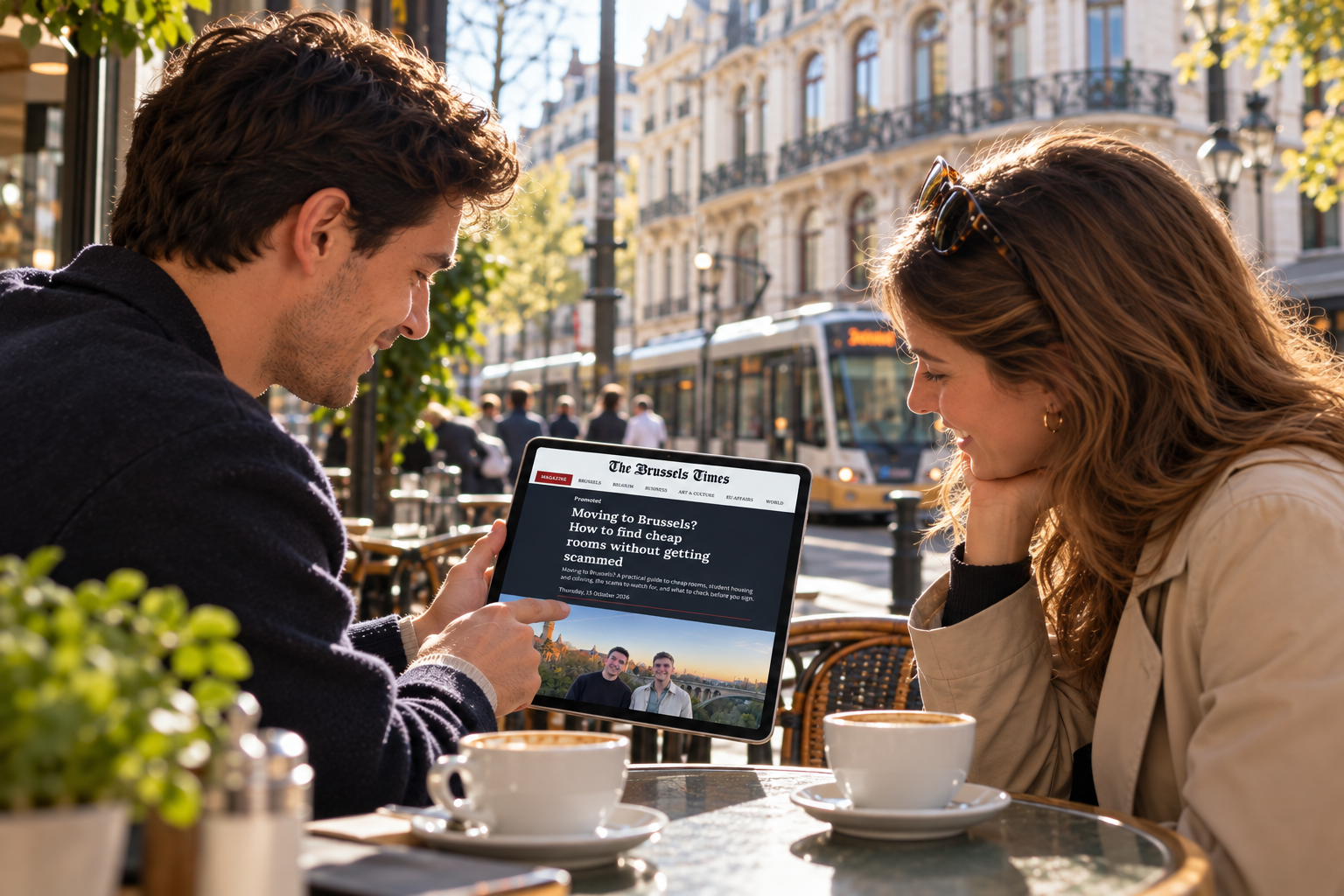
Roomie-Radar's founders share in The Brussels Times how to find cheap rooms in Brussels and spot rental scams as the platform lands in Belgium.
