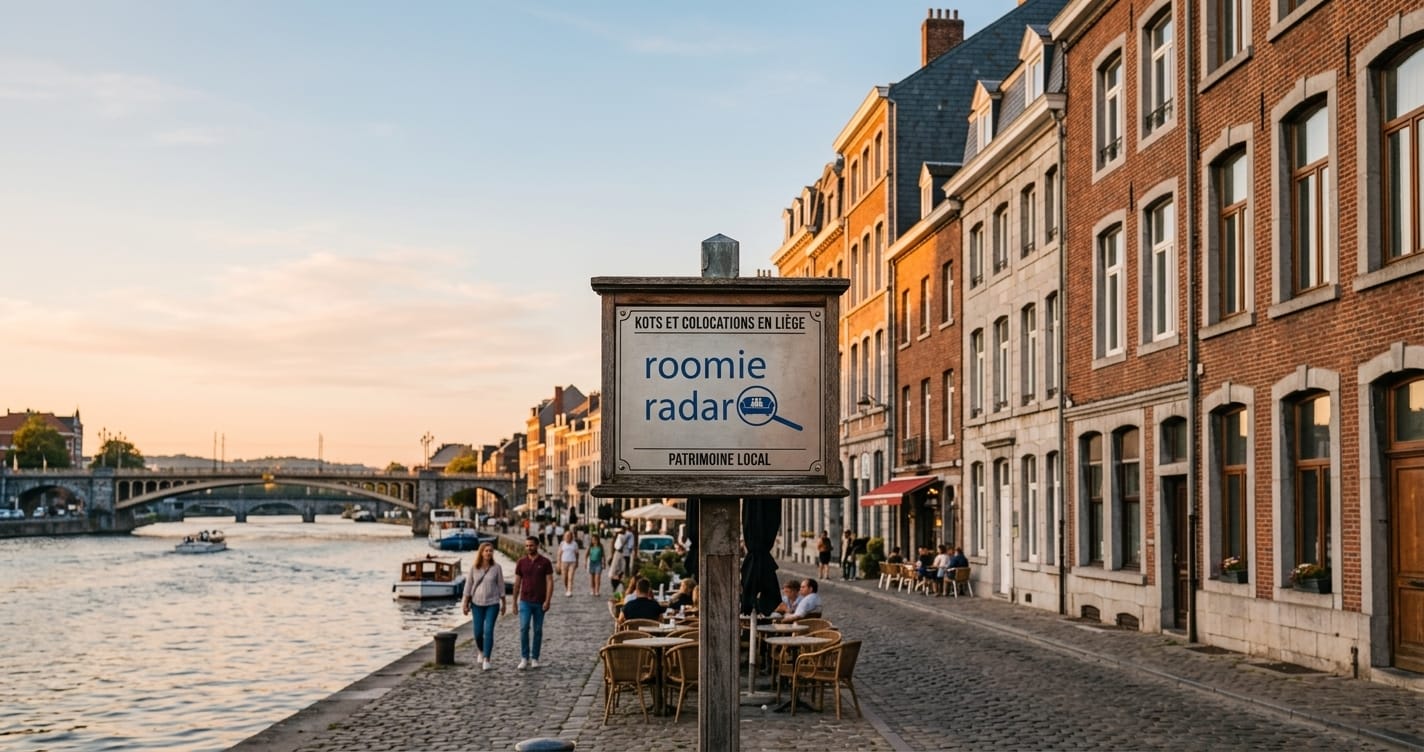
Renting a Room in Liège or Namur: How Wallonia Differs From Brussels
Wallonia has run its own rental law since 2018. Deposit rules, the shared-flat pact, and region-specific support in Liège, Namur and Charleroi.
17/08/2026



If you've started looking for a room in Leuven, chances are you've already run into the word "kot" without quite knowing what it means. It comes up constantly in expat forums and Erasmus groups every September: is it a special type of flat? Does it come with different rules than a normal rental? Short answer: yes, and understanding those rules before you sign saves you real headaches later.
A kot is a furnished student room, typically inside a house with several rooms and shared common areas — kitchen, bathroom, sometimes a living room. The word comes from Dutch and is used across Belgium, both in Flanders and in the French-speaking regions, though "chambre d'étudiant" is also heard as an equivalent term in Wallonia.
What separates a kot from a generic shared flat isn't just the vocabulary — it's the legal framework. In Flanders, the student rental contract is specifically regulated within the regional housing decree, with different rules from a standard residential lease.
Prices in Leuven typically range from €350 to €800 or more per month, depending on location and condition. Rooms inside the city ring — closer to the center and the KU Leuven campuses — tend to cost more than those in outer neighborhoods. A kot with a private bathroom usually starts above €500; one with a shared bathroom can fall below that figure.

This is the part that trips up most newcomers: a kot contract ends automatically on the agreed end date, with no notice required from either the tenant or the landlord. That's different from a standard residential lease, which usually requires a mandatory notice period.
If you need to end the contract early — for example, because you're stopping your studies — the law provides for a two-month notice period without penalty in justified cases. If you give notice later than that, a compensation equal to two months' rent can apply.
The deposit has a clear legal cap: a maximum of two months' rent, and it must be paid into a blocked account — never handed over in cash directly to the landlord. This protects both tenant and landlord in case of a dispute at the end of the contract.
For anyone renting to students, following these rules isn't optional: a poorly drafted contract, a cash deposit, or a mishandled end-of-contract notice can turn into a dispute. Listing a room with complete information from the start — real price, contract type, deposit conditions — cuts down on unnecessary back-and-forth and filters for tenants who are genuinely ready to rent.
Using Roomie-Radar is free, and listings on the platform is a verified listing. What we see at Roomie-Radar is that most of the friction in a kot search isn't about price — it's about not understanding the vocabulary or the contract terms before reaching out to a landlord. That's why every listing on the platform states the room type and basic conditions clearly, so the first contact with a landlord starts with the right information already in hand.
Student Room in Belgium: Real Prices and Market Differences in Ghent, Antwerp, Leuven and Liège
Looking for a kot in Leuven doesn't have to mean guessing local vocabulary as you go. Understanding that it's a specific rental category — with a deposit capped at two months, a mandatory blocked account, and a fixed-term contract with no automatic renewal — is what separates signing with confidence from signing with doubts.
Many of our users in Belgium land on Roomie-Radar after running into ambiguous listings on general portals. If you're searching for a kot in Leuven, Roomie-Radar lets you filter by city and room type among verified listings, and using the platform is free.
Find your kot in Leuven at roomie-radar.com.
1. What does the word "kot" actually mean?
It's the Belgian term (of Dutch origin) for a furnished student room, usually inside a shared house near a university campus.
2. Is a kot the same as a regular flatshare room?
Functionally similar, but the kot contract is subject to specific legal rules for student rentals, different from a standard residential lease.
3. How much does a kot cost on average in Leuven?
Typical prices range from €350 to €800 or more per month, depending on location, whether it has a private bathroom, and distance to the center and KU Leuven campuses.
4. What's the maximum legal deposit for a kot?
Two months' rent. No more can be charged, and it must go into a blocked account, never cash.
5. Does a kot contract renew automatically if I don't say anything?
No. A fixed-term kot contract ends automatically on the agreed date, with no notice required from either party.
6. Can I end the contract early if I stop my studies?
Yes, a two-month notice period allows you to end the contract without penalty in justified cases like stopping your studies.
7. What happens if I give notice too late?
A compensation equal to two months' rent can apply if the notice period isn't respected.
8. Does a kot have to include a private bathroom?
No, there are kots with shared bathrooms, usually cheaper, and kots with private bathrooms, which tend to cost more.
9. How do I know if a kot listing is trustworthy?
Check that the landlord accepts a viewing before asking for any payment and shows the contract before you transfer the deposit; listings on Roomie-Radar is verified.
10. Can I sublet a kot during an exchange or internship?
In certain cases, such as exchange programs or internships, a student can sublet their room without needing the landlord's explicit consent, barring a justified objection.
Wallonia has run its own rental law since 2018. Deposit rules, the shared-flat pact, and region-specific support in Liège, Namur and Charleroi.

Renting out a room in Luxembourg? Here's what income you must declare, what you can deduct, and how to get it right.
Renting in Ghent or Antwerp? Deposit caps, EPC-linked indexation, and the Flemish rules that aren't the same as Brussels.

Mandatory lease registration, the EPC certificate, and how a furnished room is taxed in Belgium — what every landlord needs before listing.
