
Tenant insurance in Luxembourg: is it mandatory, and what it costs
Do you need tenant insurance in Luxembourg? It isn't required by law, but almost no lease gets signed without it. Here's why.
07/09/2026



When most people think about studying in Belgium, Brussels comes to mind first. But most university students in the country don't live in the capital. They live in Ghent, in Leuven, in Antwerp, in Liège — cities with their own universities, their own rental markets, and rules that vary more between them than you'd expect.
If you're searching for a kot — the Belgian term for a student room — outside Brussels, this article covers what you actually need to know: real prices, differences between cities, and how the contract works.
A kot is a furnished room rented to a student, usually near a Belgian university or college. The term covers the classic room in a shared flat as well as an individual studio or a place in a university residence.
Kot contracts follow a specific legal framework, different from standard residential rental. If the landlord uses the model lease recognised by university housing platforms, you have a guaranteed legal basis aligned with Belgian regulation on student tenancy. The security deposit is capped by law at a maximum of two months' rent, and is refunded at the end of the contract if the room is returned in its original condition.
One important detail: once a kot contract is signed, you are legally bound until the end of the agreed period — even if you stop attending classes or your plans change. Early termination is only possible under very specific circumstances, and usually still requires two months' notice even then.
Ghent is, of the four cities, the most affordable. The median kot rent in Ghent in 2026 sits around €440/month, all-inclusive — roughly 15% cheaper than Brussels.
The cheapest neighbourhoods are Sint-Amandsberg and Ledeberg, with kots starting at €350. The historic centre, around Overpoort and Patershol, ranges from €450 to €600. Modern studios or student residences go up to €650.
Ghent University (UGent) offers more than 80 English-taught master's programmes, making it accessible for international students who don't speak Dutch. Listings are usually posted in Dutch, but landlords in Ghent are generally open to English-speaking applicants.
Leuven, home to KU Leuven, has the most pressured student accommodation market in the country. Demand consistently outpaces supply every academic year, meaning anyone who starts searching late faces very limited options.
This has a direct practical consequence: in Leuven, searching several months in advance isn't optional — it's the only realistic way to secure a room in a reasonable area. Listings disappear within minutes of being posted, particularly near campus.
Antwerp has a fast-growing international student market, and one feature that sets it apart: the city, in collaboration with local educational institutions and the student platform STAN, runs a voluntary inspection scheme called Kotweb.
Accommodation that passes municipal inspection receives a quality label — not mandatory, but a guarantee covering fire safety, habitability conditions, and urban planning compliance. Kotweb is the only platform that consistently flags these labels, making it a useful reference even if you end up renting through another channel.
University residences near the city campus offer rooms from roughly €360 to €495 per month, all-inclusive. Near the Drie Eiken campus in Wilrijk, individual rooms with shared bathroom and kitchen are available through specialist student housing operators.
Liège, home to ULiège, is of the four cities the one where flatsharing between students is most common as a standard model: each person has their own room and shares the kitchen, bathroom and living room.
Prices in Liège are the lowest of the four cities compared. It's a particularly relevant option for anyone prioritising budget over immediate proximity to the more expensive Flemish city centres.
Imagine finding the perfect room in Leuven two weeks before term starts. You sign it without checking whether the landlord uses the recognised model lease. Three months later, you discover the contract doesn't clearly specify which costs are included in the rent, and you end up paying an unexpected final settlement for water and electricity usage you weren't expecting.
This scenario repeats across all four cities. The mistake isn't the room itself — it's signing without verifying that the contract follows the standard model recognised by local educational institutions, which clearly states what is and isn't covered.
Before signing any kot contract, it's worth checking three things: that the contract specifies the exact period, that it details what's included in the monthly price, and that the deposit doesn't exceed the legal maximum of two months' rent.
Luxembourg Rental Reform 2024: What Changed for Flatshare Tenants and Why It Matters Before You Sign
For a landlord renting student rooms in Ghent, Antwerp, Leuven, or Liège, the student tenant profile has clear advantages over the general rental market: predictable academic-year turnover, consistently high seasonal demand, and a candidate profile that typically has family or scholarship backing as payment security.
Competition among landlords in cities like Leuven is low — demand structurally outpaces supply. This means a landlord with a well-presented room, a clear contract, and a price aligned to the local market gets near-immediate responses.
What we observe at Roomie-Radar is that landlords listing verified rooms outside Brussels — in Ghent, Antwerp, Leuven, or Liège — reach a candidate profile just as qualified as in the capital, simply with less platform competition for their attention.
État des Lieux in Brussels: How to Protect Your Rental Deposit From Day One in a Shared Room
Searching for a student room in Belgium shouldn't be limited to Brussels. Ghent offers the best balance of price and quality. Leuven requires early planning due to demand pressure. Antwerp brings a quality system most people overlook. Liège remains the most affordable option for anyone prioritising budget.
At Roomie-Radar, verified listings cover these four cities alongside Brussels. Start your search at roomie-radar.com or check available rooms directly at roomie-radar.com/rooms. Using Roomie-Radar is free.
1. What is a kot in Belgium?
A kot is a furnished room rented to a student, usually near a Belgian university. The term includes the classic room in a shared flat as well as an individual studio or a place in a university residence.
2. Which is the cheapest city for student rooms in Belgium?
Liège is typically the most affordable of the four main cities outside Brussels, followed by Ghent, where the median rent in 2026 sits around €440/month all-inclusive — roughly 15% cheaper than Brussels.
3. Why is it so hard to find a room in Leuven?
Leuven has the most pressured student accommodation market in Belgium. Demand consistently outpaces supply every academic year due to the high number of KU Leuven students relative to available rooms. Searching several months in advance is practically mandatory.
4. What is Antwerp's quality label system?
It's a voluntary inspection scheme run by the city of Antwerp in collaboration with local educational institutions. Accommodation that passes inspection receives a quality label guaranteeing fire safety and habitability conditions, although the label isn't mandatory to rent.
5. How much is the security deposit for a kot in Belgium?
By law, the security deposit for a student room in Belgium cannot exceed two months' rent. It's refunded at the end of the contract if the room is returned in its original condition, minus any justified costs.
6. Can I terminate a kot contract early if my plans change?
Early termination is only possible under very specific legally defined circumstances, and usually still requires two months' notice even then. Once signed, the contract legally binds you until the end of the agreed period.
7. Is it possible to study in Ghent without speaking Dutch?
Yes, for master's programmes. Ghent University offers more than 80 English-taught master's degrees. Bachelor's programmes remain mostly in Dutch. For finding a kot, landlords in Ghent are generally open to English-speaking applicants, even though listings are usually in Dutch.
8. What does the price of a kot in a university residence typically include?
In most cases, the all-inclusive price covers water, electricity, heating, and wifi connection. Basic furniture — bed, desk, chair, wardrobe — is usually included too. It's always worth verifying exactly what each contract covers before signing.
9. What's the difference between a classic kot and flatsharing in Belgium?
A classic kot is usually an individual room with bathroom and kitchen shared with other students in the same building or residence. Flatsharing means renting an apartment or house among several students, where each person has their own room and common areas are shared more informally among the tenants themselves.
10. Does Roomie-Radar have verified rooms outside Brussels in Belgium?
Yes. Verified listings on Roomie-Radar cover Ghent, Antwerp, Leuven, and Liège alongside Brussels. Using Roomie-Radar is free for both tenants and landlords.
Do you need tenant insurance in Luxembourg? It isn't required by law, but almost no lease gets signed without it. Here's why.

RTL Luxembourg looks at how Roomie-Radar works: over 1,500 users, 260 active listings, and why searching for a room stays free.

Renting in Ghent or Antwerp? Deposit caps, EPC-linked indexation, and the Flemish rules that aren't the same as Brussels.
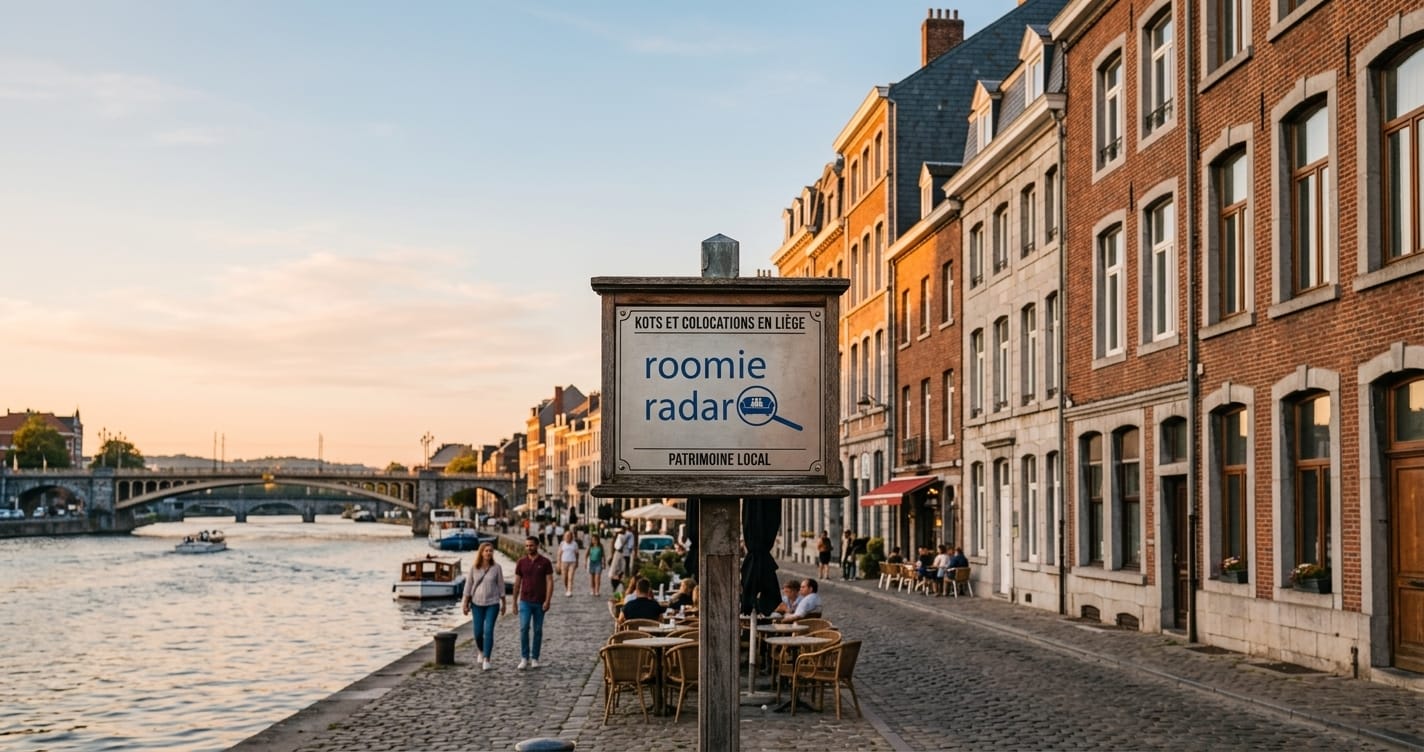
Wallonia has run its own rental law since 2018. Deposit rules, the shared-flat pact, and region-specific support in Liège, Namur and Charleroi.
