
Renting out a room or kot in Belgium: do you need a permis de location?
Renting out a room in Wallonia? What the permis de location is, what it costs in 2026, and the fine you risk without one.
06/10/2026

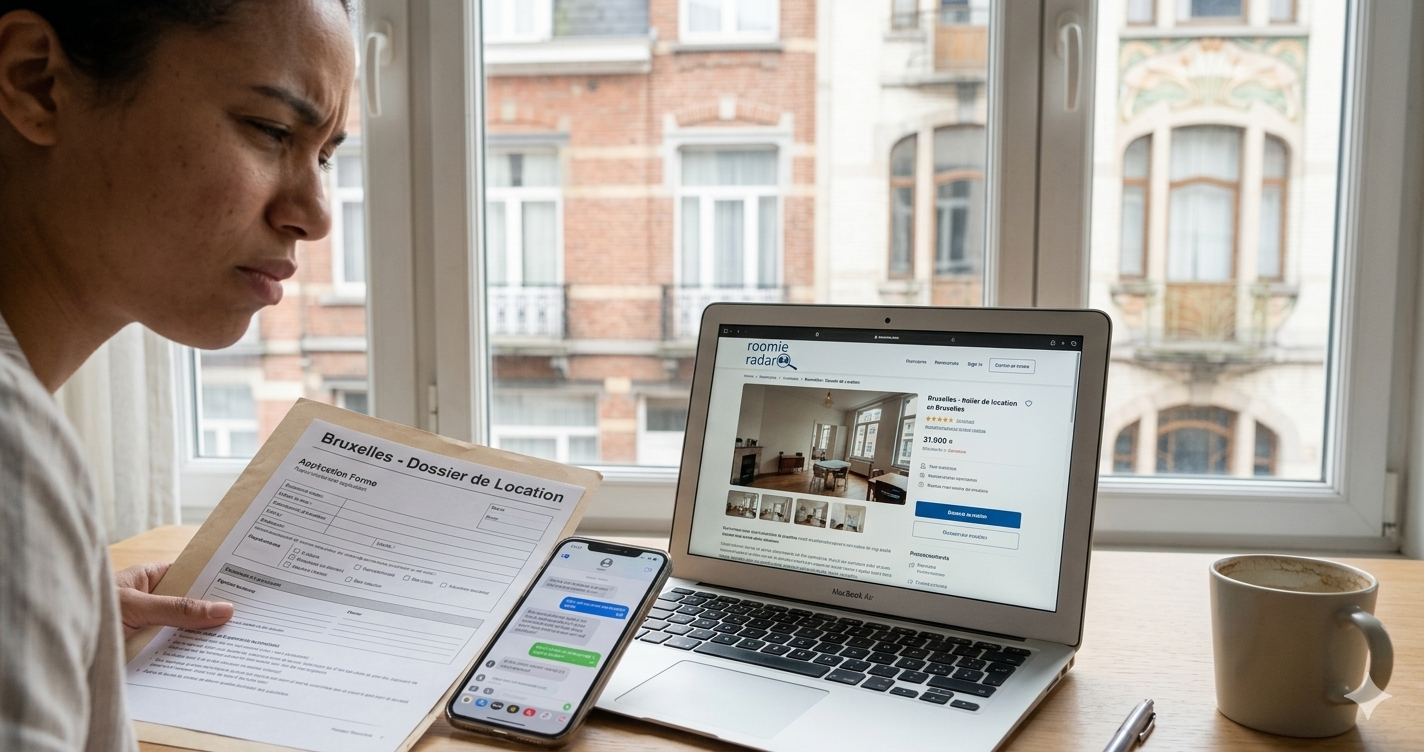
You've been searching for a shared room in Brussels for three weeks. Your income is stable, your references are solid, your dossier is complete. Messages go unanswered. Viewings you've arranged get cancelled without explanation. And the listing you found on Monday — identical dossier, different name in the subject line — gets a confirmed viewing in two hours.
This isn't paranoia. It's rental discrimination. And in Brussels, it is documented, measured, and prohibited by law.
The Brussels-Capital Region has been strengthening its anti-discrimination instruments precisely because the data shows the problem is structural. In 2026, new enforcement mechanisms came into force that allow accredited organisations to conduct correspondence testing and file complaints on behalf of affected tenants.
This article explains what protections exist, how to recognise rental discrimination, what you can do if you experience it, and why where you start your search matters more than it might seem.
In Belgium, discrimination in access to housing is prohibited under multiple overlapping legal frameworks. The Law of 10 May 2007 against discrimination prohibits any difference in treatment based on protected criteria — including national origin, ethnicity, skin colour, language, religion, or beliefs. This prohibition applies explicitly to access to goods and services, including housing rental.
At the regional level, the Brussels-Capital Region Housing Code reinforces these protections and establishes that any tenant selection criterion must be objectively justified and proportionate to the legitimate aim it serves. A landlord can require demonstrable financial capacity. They cannot reject an application because of the applicant's name, nationality, or ethnic origin.
Since 2026, the Brussels-Capital Region has implemented new tools to make these protections effective. Accredited organisations can conduct correspondence testing — sending identical applications with names of different origins — and use the results as evidence in administrative or judicial proceedings. The primary point of reference for reporting discrimination is Unia, the interfederal centre for equal opportunities. Official information on rental discrimination in Brussels is available at be.brussels.
Correspondence testing conducted in the Belgian rental market reveals a systematic gap. Studies cited by European integration bodies show that in 23% of cases, male North African names and female Sub-Saharan names receive less favourable treatment than male French names, under identical financial conditions.
For someone arriving in Brussels as an expat with a name that doesn't sound French or Dutch, this has immediate practical consequences: fewer responses to initial messages, more cancelled viewings, more requests for additional documentation that other candidates are not asked for.
The Brussels flatshare market is particularly exposed to this problem. Unlike agency-managed contracts — which have more formalised procedures — rooms in shared flats are mostly listed by private landlords through informal channels, where the first filter is frequently the name at the top of the contact message.
We see this directly at Roomie-Radar since launching in Belgium: tenants with complete, verified profiles receive significantly higher response rates than those who reach out through Facebook groups or messages without context. A verified profile puts the candidate on equal footing from the first contact.
Rental discrimination is rarely explicit. A landlord who rejects a candidate for their origin doesn't say so directly. What happens in practice is more subtle — and precisely because of that, harder to document without specific tools.
Signs that may indicate rental discrimination in your search for a room in Brussels:
No response to well-formatted messages with a complete dossier, while the listing remains active days later. Viewings that are arranged and then cancelled without explanation, particularly if the listing disappears immediately after. Requests for documentation that go beyond what is standard — passport photocopy plus residence permit plus employment letter, when other candidates are only asked for payslips. Direct questions about nationality, religion, or origin during a viewing, when those questions have no bearing on the applicant's financial capacity.
None of these signals is sufficient proof on its own. Their probative value appears in the combination and, above all, in the contrast with a correspondence test: the same application, sent with a different name, receiving an immediate response.
The legal framework exists. Using it requires knowing where to go and what documentation to bring.
Document from the start. Keep screenshots of all listings, messages sent, responses received, and dates. If a viewing was cancelled, save that message. If the listing disappeared after your contact, save a previous screenshot or browser history.
Contact Unia. Unia is Belgium's interfederal centre for equal opportunities. You can file a complaint at unia.be, free of charge. Unia analyses the case, can mediate, and if there is sufficient evidence, can initiate formal proceedings. They can also advise you on what additional documentation is useful to build.
Contact the Service de Conciliation Locative. For housing access disputes in Brussels, the Service de Conciliation Locative of the Brussels-Capital Region offers free mediation. Information is available at be.brussels.
Accredited housing rights organisations. The Brussels-Capital Region has accredited organisations that can act on your behalf, including the possibility of conducting correspondence testing to document a pattern of discrimination.
État des Lieux in Brussels: How to Protect Your Rental Deposit From Day One in a Shared Room
Rental discrimination operates mainly at the first filter: the moment the landlord decides whether or not to respond to a request. That filter is applied before the candidate can present their income, references, or tenancy history.
In informal channels — Facebook groups, WhatsApp, direct messages on unverified portals — that first contact is almost always the name. The landlord reads the name before reading anything else.
On Roomie-Radar, candidates build a verified profile that the landlord sees before receiving any message: income, employment status, the type of flatmate they're looking for, and optional references. The first filter stops being the name and becomes the complete profile.
That doesn't eliminate discrimination. But it changes the dynamics of the first contact — which is exactly where the majority of documented exclusion happens.
Using Roomie-Radar is free. Verified rooms in Brussels are at roomie-radar.com/rooms.
Rental discrimination in Brussels exists, is documented, and is illegal. The Brussels-Capital Region's legal framework offers real tools to report it — but using them requires documentation, time, and knowledge of the process.
The most immediate practical response is in the starting point: searching on platforms with verified profiles that present your application in full from the first contact, not as a name in a Facebook group.
Roomie-Radar connects tenants with verified listings in Brussels. Start at roomie-radar.com.
1. Is rental discrimination illegal in Brussels?
Yes. The Law of 10 May 2007 against discrimination prohibits any difference in treatment in access to housing based on protected criteria including national origin, ethnicity, skin colour, language, and religion. The Brussels-Capital Region Housing Code reinforces these protections. A landlord can require demonstrable financial capacity but cannot reject an application based on the applicant's name, nationality, or ethnic origin.
2. Who should I contact if I believe I have experienced rental discrimination in Brussels?
The reference body is Unia, Belgium's interfederal centre for equal opportunities. You can file a complaint free of charge at unia.be. Unia can mediate, advise on documentation, and if there is sufficient evidence, initiate formal proceedings. For housing access disputes in the Brussels-Capital Region you can also contact the Service de Conciliation Locative at be.brussels.
3. What documentation should I gather if I want to report rental discrimination?
Keep screenshots of all listings, messages sent, responses received, and dates. If a viewing was cancelled, save that message. If the listing disappeared after your contact, save a previous screenshot or your browser history. The stronger your documentation of a pattern — not just a single incident — the more solid the complaint.
4. What is correspondence testing and how is it used in Belgium?
Correspondence testing involves sending identical rental applications with names of different origins to identify differences in treatment. In Belgium, since 2026, organisations accredited by the Brussels-Capital Region can conduct these tests and use the results as evidence in administrative or judicial proceedings.
5. Can a landlord in Brussels demand additional documentation based on my nationality?
No. A landlord can request standard financial documentation — payslips, employment contract, references from previous landlords. They cannot demand additional documentation based on nationality or origin, nor ask questions about religion or ethnicity during the selection process. If you receive requests that go beyond what is standard and that are not applied to other candidates, this is a signal of discriminatory treatment.
6. How does Roomie-Radar reduce the risk of discrimination at the first point of contact?
On Roomie-Radar, tenants build a verified profile that includes employment status, income, living preferences, and optional references. The landlord sees that complete profile before receiving any message. The first filter stops being the name and becomes the full set of candidate information — which changes the dynamic of first contact compared to Facebook groups or unverified portals. Using Roomie-Radar is free.
7. Does rental discrimination affect shared rooms specifically, or all rental types equally?
It affects shared rooms particularly, because listings circulate mostly through informal channels and the selection process is less formalised than in agency-managed contracts. The shared room segment is most exposed because the first filter is usually a direct message — where the name is the first thing the landlord reads.
8. What new protections came into force in Brussels in 2026?
Since 2026, the Brussels-Capital Region has reinforced its anti-discrimination instruments in the rental market. New measures include the possibility for accredited organisations to conduct correspondence testing and file complaints on behalf of affected tenants. Minimum habitability standards for rental properties have also been extended. Official information is available at be.brussels.
9. Can I rent a room in Brussels as a foreign national without a Belgian residence permit?
The ability to rent legally depends on your migration status. EU citizens have the right of residence in Belgium and can rent freely. For non-EU citizens, conditions depend on the type of residence permit. What the law prohibits is a landlord rejecting a qualified candidate based on nationality or origin — not on objective legal status.
10. What is the difference between direct and indirect discrimination in rental?
Direct discrimination occurs when a landlord explicitly rejects a candidate for a protected criterion — for example, stating openly that they do not rent to people of a certain nationality. Indirect discrimination occurs when an apparently neutral practice has a disproportionate effect on people with protected characteristics — for example, requiring documentation that only residents of certain countries can provide. Both forms are prohibited in Belgium.
Renting out a room in Wallonia? What the permis de location is, what it costs in 2026, and the fine you risk without one.
Renting in Ghent or Antwerp? Deposit caps, EPC-linked indexation, and the Flemish rules that aren't the same as Brussels.

Roomie-Radar's founders share in The Brussels Times how to find cheap rooms in Brussels and spot rental scams as the platform lands in Belgium.

Sharing a flat in Luxembourg? What to ask before moving in and how to replace a flatmate without losing the deposit.
